Introduction
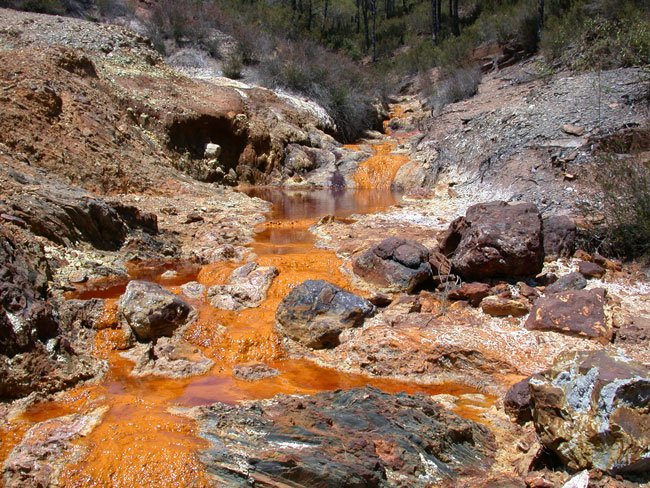
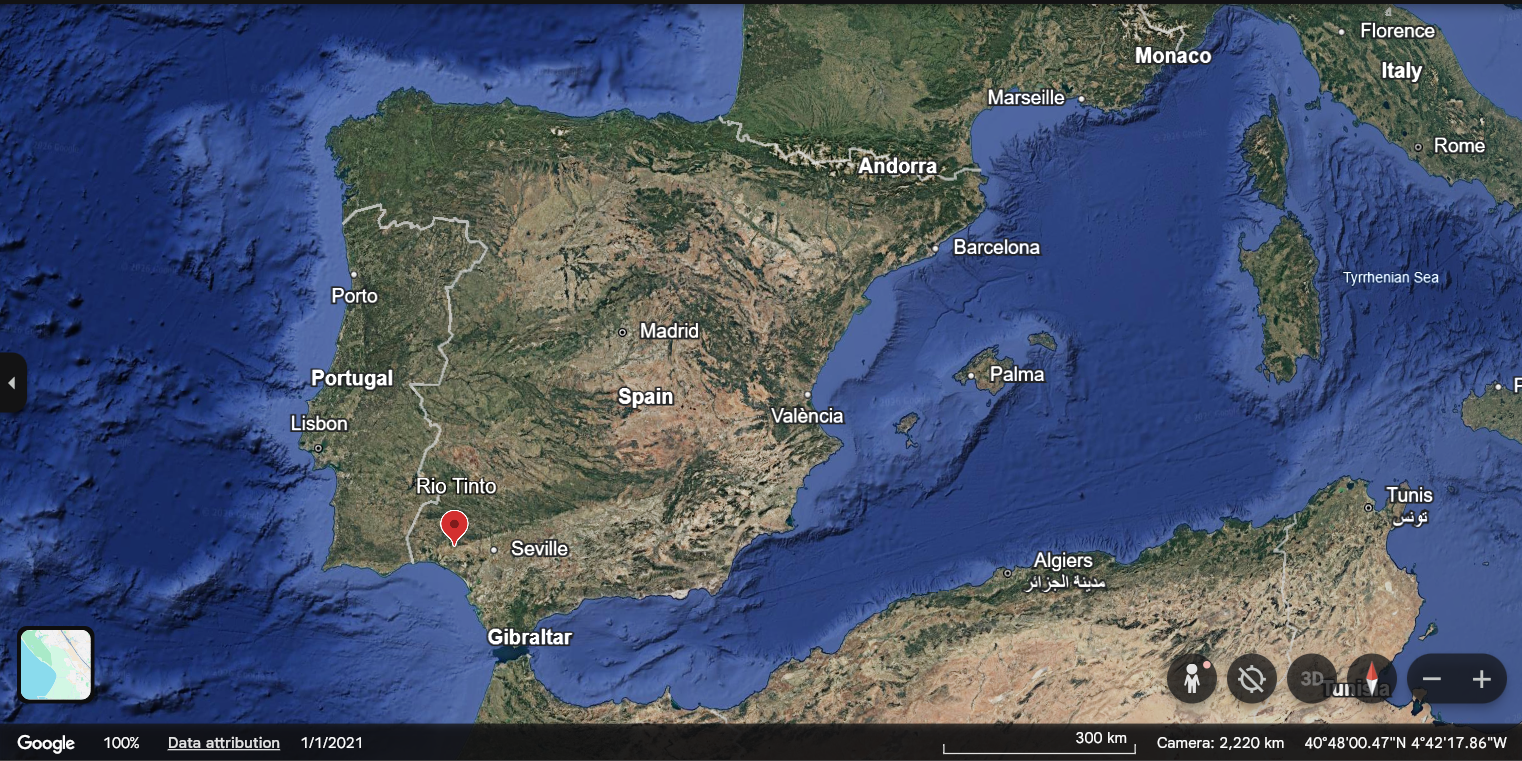
Rio Tinto is a river in Southwestern Spain, which has been an important mining site historically, and has become highly acidic. Even though it is toxic to most biology, some microbes can thrive there.
Tinto river is located at the core of the Iberian Pyritic Belt (IPB). It is an unusual ecosystem due to its size (100 km long), constant acidic pH (mean pH, 2.3), and high concentration of heavy metals, iron, and sulfate in its waters, characteristics that make the Tinto River Basin comparable to acidic mine drainage (AMD) systems
Astrobiological importance
As it is Iberyan Pyritic Belt, the river flows over Massive Sulphide Deposits (MSP-s), The subsurface rocks on the river bed contain iron and sulphide minerals on which the bacteria feed…
Rio Tinto hosts a variety of microbes, The hosts communities of microbes that contribute to carbon, nitrogen and sulfur cycle. The phylogenetic analyses of 16S rRNA genes retrieved from the Tinto River sediments identified bacterial sequences from the Proteobacteria, Bacteroidetes, Firmicutes, Actinobacteria, and Acidobacteria phyla and archaeal sequences from the Euryarchaeota/Thermoplasmatales group…. (To be continued)
Additional resources
Sánchez-Andrea I, Rodríguez N, Amils R, Sanz JL. Microbial diversity in anaerobic sediments at Rio Tinto, a naturally acidic environment with a high heavy metal content. Appl Environ Microbiol. 2011 Sep;77(17):6085-93. doi: 10.1128/AEM.00654-11. Epub 2011 Jul 1. PMID: 21724883; PMCID: PMC3165421. https://pmc.ncbi.nlm.nih.gov/articles/PMC3165421/